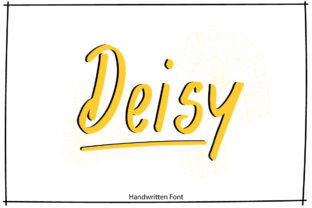
Deisy: A Bold Script Font for High-Impact Design
Deisy is a striking script font that stands out for its elegant yet powerful visual presence. Designed with a balance of fluidity and structure, it offers a unique blend of readability and artistic flair. This makes it particularly well-suited for headlines, logos, and other design elements where a strong visual statement is needed.
What Makes Deisy Distinct?
Unlike many script fonts that prioritize ornate details or overly cursive forms, Deisy maintains a clean and modern aesthetic. Its letterforms are carefully crafted to ensure legibility even at smaller sizes, while still retaining the organic flow characteristic of handwritten scripts. This combination allows Deisy to be both visually engaging and functionally effective in a variety of design contexts.
The font’s versatility extends to its use in both digital and print media. Whether applied to a website header, a poster, or a branding element, Deisy delivers consistent performance across different formats. Its open counters and balanced spacing contribute to its clarity, making it a reliable choice for designers who need a high-impact typeface without sacrificing readability.
Comparing Deisy to Similar Options
When considering alternatives to Deisy, it's important to evaluate how different script fonts perform in specific design scenarios. For instance, some fonts may offer more dramatic flourishes or a more traditional appearance, but these features can sometimes compromise legibility or adaptability.
Fonts like Playfair Display or Great Vibes are often used for similar purposes, such as creating a sense of elegance or sophistication. However, these fonts tend to have more pronounced serifs or intricate details that may not work as well in all design applications. Deisy, by contrast, provides a more neutral yet expressive alternative that can fit into a wider range of styles and themes.
In comparison to more minimalist script fonts, Deisy retains a level of visual interest that can help a design stand out. It avoids the risk of appearing too plain or generic, which is a common challenge with simpler typefaces. At the same time, it doesn’t overwhelm the viewer with excessive ornamentation, allowing it to remain versatile for various projects.
Best Use Cases for Deisy
Deisy excels in situations where a bold and memorable visual identity is required. It is ideal for headlines in marketing materials, such as brochures, banners, or social media graphics. Its strong presence makes it an excellent choice for brand names or taglines that need to capture attention quickly.
For web design, Deisy can be used effectively in hero sections or call-to-action buttons. When paired with a complementary sans-serif font, it can create a dynamic contrast that enhances the overall layout. However, it’s important to consider the context—using it for body text is generally not recommended due to its decorative nature and potential impact on readability.
In print design, Deisy can add a touch of refinement to product packaging, event invitations, or editorial layouts. Its ability to convey both style and clarity makes it a valuable tool for designers working on projects that require a polished look without being overly complex.
Tradeoffs and Limitations
While Deisy offers many advantages, it may not be the best choice for every project. Its distinctive style can sometimes be too dominant, potentially overshadowing other design elements if not used thoughtfully. In such cases, a more subdued typeface might be more appropriate to maintain balance within the composition.
Another consideration is the font’s availability. Depending on the platform or software being used, Deisy may not be included by default, requiring users to download or license it separately. This can be a minor inconvenience for those who prefer immediate access to a wide range of typefaces.
Additionally, while Deisy is designed for readability, its script form may not be suitable for all audiences. For example, readers with visual impairments or those viewing content on small screens may find it challenging to read at certain sizes. Designers should take these factors into account when deciding whether to incorporate Deisy into their work.
When Deisy Is the Right Choice
Deisy is particularly well-suited for projects that aim to make a strong visual impression. If the goal is to create a memorable headline or a striking logo, Deisy can provide the necessary impact without compromising on style. Its clean yet expressive design makes it a good fit for brands looking to communicate confidence and creativity.
It also works well in designs that require a balance between tradition and modernity. For instance, a wedding invitation that blends classic elements with contemporary aesthetics could benefit from Deisy’s ability to bridge these two approaches. Similarly, a tech startup aiming to convey innovation while maintaining a human touch might find Deisy to be a compelling option.
Alternatives to Consider
If Deisy doesn’t align with a particular project’s needs, there are several alternatives worth exploring. For more formal or traditional applications, fonts like Caslon or Baskerville might be more appropriate. These typefaces offer a timeless quality that can complement a wide range of design styles.
For a more casual or playful tone, fonts such as Lobster or Pacifico could be better suited. These options emphasize a handcrafted feel and are often used in creative or informal contexts. However, they may lack the refined structure that Deisy provides, which could be a drawback for more professional or polished projects.
Designers should also consider the purpose of the text when selecting a font. If the primary goal is to convey information clearly, a sans-serif typeface like Helvetica or Arial might be more effective. These fonts prioritize simplicity and legibility, making them ideal for body text or long-form content.
Making an Informed Decision
Choosing the right font involves understanding the goals of the design and the audience it will reach. Deisy offers a compelling option for those seeking a bold and expressive typeface, but it’s important to weigh its strengths against the specific requirements of the project.
By evaluating factors such as readability, versatility, and visual impact, designers can determine whether Deisy is the best fit for their needs. In many cases, it can serve as a powerful tool for creating standout designs, but it’s also wise to explore other options to ensure the most effective solution is selected.
Ultimately, the decision should be based on a thoughtful assessment of the design’s purpose, the intended message, and the preferences of the target audience. With this approach, Deisy can be a valuable addition to any designer’s toolkit.